 (618) 939-4769




Every fall, homeowners hear many of the same lawn care recommendations. Clean up the leaves, keep mowing while the grass is growing, prepare your landscaping for colder weather and aerate your lawn.
But is fall aeration really worth it, especially if your lawn looks fairly healthy?
For many lawns in Columbia, Waterloo, Millstadt, and the surrounding Illinois communities, the answer is yes. The reason has less to do with what you see on top of the lawn and more to do with what has been happening underneath it all year. After months of mowing, foot traffic, summer heat, periods of heavy rain, and everyday use, the soil beneath your grass can become compacted. Fall aeration helps address that compaction while giving your lawn an opportunity to recover from summer and develop a stronger root system before winter.
What Does Aerating Your Lawn Actually Do?
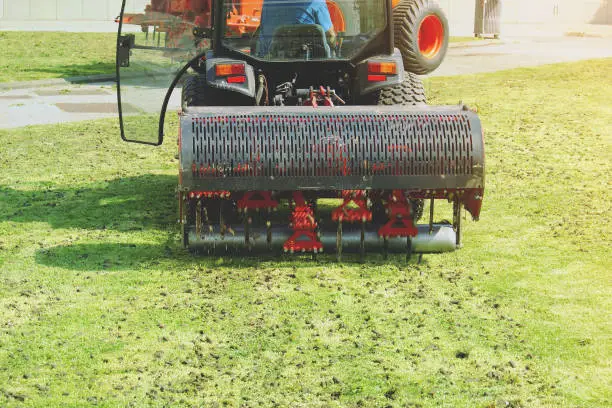
Core aeration removes small plugs of soil from the lawn, creating openings throughout the turf. Those openings allow air, water, and nutrients to move more easily into the soil and reach the root zone.
That matters because healthy grass depends on more than what is happening above ground. When soil becomes compacted, there is less space for air and water to move through it. Grass roots have a harder time growing deeper into the soil, and the lawn may become more susceptible to stress when conditions turn hot or dry.
Aeration helps relieve that compaction and creates better growing conditions below the surface. The soil plugs left behind after core aeration can remain on the lawn, where they gradually break down and return soil and organic matter to the turf.
You may not see an immediate dramatic transformation after your lawn is aerated, but that does not mean the process is not working. Much of the benefit is happening where you cannot see it.
Why Is Fall The Best Time To Aerate?
Timing matters when it comes to lawn care, and fall provides favorable growing conditions for the cool-season grasses commonly found in Illinois.
After dealing with summer heat and periods of limited rainfall, cool-season lawns begin actively growing again as temperatures moderate. That gives the grass an opportunity to recover from the aeration process while focusing energy on root growth. Early to mid-fall is an ideal time for core aeration of cool-season lawns.
Fall also gives homeowners an opportunity to address problems that became more noticeable during the summer. Thin areas, compacted soil, bare spots, and struggling turf often become easier to identify after a stressful growing season. Rather than waiting until spring to respond, fall lawn care can begin repairing those areas before the lawn enters winter dormancy.
This is especially important if aeration is paired with overseeding. The holes created during core aeration improve seed-to-soil contact, giving new grass seed a better opportunity to establish.
Does Every Lawn Need Aeration?
Not every lawn has the same level of soil compaction, but most lawns experience some degree of it over time.
Think about how much activity your yard sees during a typical year. Children and pets run across it, lawn equipment travels over it repeatedly and outdoor gatherings create additional foot traffic. Even normal mowing contributes to pressure on the soil over time.
Some soil types are more prone to compaction than others. Clay-heavy soils, for example, can become dense over time, making it more difficult for water, air, and nutrients to reach the roots. Regular core aeration can help loosen compacted soil and create better conditions for healthy root growth.
There are also signs that may indicate your lawn would benefit from aeration. Water that has difficulty soaking into the ground, thinning grass, areas that dry out quickly, and hard soil can all point toward compaction. However, a lawn does not necessarily need to look unhealthy before aeration can be beneficial. Like many lawn care practices, aeration can be used proactively rather than waiting for a larger problem to develop.
If Aeration Still Worth It If Your Lawn Looks Good?
This is where homeowners sometimes question whether the service is necessary. If the grass is green and the lawn looks healthy, why disturb it?
A healthy-looking lawn can still have compacted soil developing underneath it. The effects may not become obvious until the grass is placed under stress. Summer heat and drought are often when underlying lawn problems become much easier to see.
Aeration is not simply about repairing a lawn that is already struggling. It can also help maintain the conditions that allow a healthy lawn to continue performing well. Improving the movement of water and air into the soil and supporting stronger root development can help prepare the grass for the stresses it will face during the next growing season.
Think of fall aeration as part of maintaining the lawn rather than rescuing it. Waiting until the grass is thin, weak, or badly damaged can mean more work is required to restore it later.
Why Aeration and Overseeding Work Well Together
Aeration can provide benefits on its own, but fall is also an excellent opportunity to address thin or bare areas through overseeding.
Grass naturally thins over time because of heat, drought, disease, traffic, and normal aging. Once the turf becomes thin, weeds have more opportunities to establish themselves in the open spaces. Overseeding introduces new grass into the existing lawn to help improve turf density.
Aerating first creates openings where seed can make better contact with the soil instead of simply sitting on top of existing grass or thatch. This combination can be particularly valuable for lawns that came out of summer looking thin or stressed.
At Linnemann Lawn Care & Landscaping, our fall aeration and seeding service pairs core aeration with turf-type tall fescue seed selected for our Illinois climate. The goal is not simply to make the lawn look better for a few weeks in the fall. It is to help establish stronger turf that is better prepared for the seasons ahead.
What Happens If You Skip Fall Aeration?
Skipping aeration for one season does not mean your lawn will suddenly fail. However, compaction does not correct itself simply because the season changes.
If soil continues becoming more compacted year after year, water, oxygen, and nutrients can have greater difficulty reaching the root zone. Root systems may remain shallow, drainage problems can become more noticeable, and the lawn may have a harder time recovering from periods of stress.
For homeowners who invest in fertilization, weed control, watering, and other lawn care throughout the year, soil conditions are an important part of protecting that investment. Products applied to the lawn can only do so much if the grass is growing in soil that makes it difficult for roots to access what they need.
Fall aeration helps address the foundation of the lawn so the other work you put into it has better conditions in which to succeed.
So, Is Fall Aeration Worth It?
If you want a healthier lawn that is better equipped to handle the heat, drought, foot traffic, and other stresses that come with another growing season, fall aeration is a valuable part of ongoing lawn care.
The biggest benefits are not always immediately visible. Aeration works below the surface by relieving soil compaction, improving access to air and water, supporting root development, and creating better conditions for overseeding. Those improvements help set the lawn up for healthier growth rather than simply addressing how it looks today.
At Linnemann Lawn Care & Landscaping, we provide fall aeration and seeding services for homes and businesses in Columbia, Waterloo, Millstadt, and surrounding Illinois communities. If you are wondering whether your lawn would benefit from aeration this fall, contact our team to schedule your service and give your lawn a stronger foundation heading into the next growing season.



Comments (0)
Thanks for your comment!
Thanks for your feedback! Your comments have been successfully submitted! Please note, all comments require admin approval prior to display.
Error submitting comment!
There is a problem with your comment, please see below and try again.